The Financialisation of Luxury Culture

Luxury was once consumed as an expression of taste, craftsmanship and symbolic distance. Today, it is just as likely to be discussed in the language of scarcity, appreciation and asset performance.
Recently, I purchased a leather bag from a premium label rather than one of the established European luxury houses. What lingered afterwards was not the object itself, but the realisation that my relationship with luxury had fundamentally changed.
Historically, luxury culture has operated on a relatively stable assumption: the more expensive the object, the more desirable and emotionally compelling it should become. Higher prices implied superior craftsmanship, stronger heritage and deeper exclusivity. Luxury justified itself through elevation.
Yet this equation feels less stable than it once did.
Instead of spectacle, I found myself drawn toward restraint. The bag itself was understated and materially confident. There were no oversized logos or aggressively recognisable design codes engineered for immediate social identification. Its appeal came from proportion, tactility and endurance. Most importantly, the object felt designed to participate in life rather than simply perform luxury within it.
Thorstein Veblen’s theory of conspicuous consumption argued that certain goods derive desirability precisely from their expense. Within this framework, price itself functions as a signal — evidence of wealth, exclusivity and social distinction. For decades, the luxury industry expanded comfortably within this logic. Escalating prices reinforced desirability rather than weakening it, while consumers accepted the implicit promise that luxury products offered something fundamentally superior: better materials, stronger craftsmanship and heightened emotional value.
But luxury no longer operates within the same cultural conditions that once sustained this equation.
Over the past decade, heritage fashion houses have evolved into vast financial ecosystems controlled by multinational conglomerates. Products once associated primarily with craftsmanship and exclusivity are now deeply intertwined with investment discourse, scarcity engineering and secondary resale markets. Luxury handbags are routinely discussed in the language of appreciation potential, portfolio diversification and long-term asset performance.
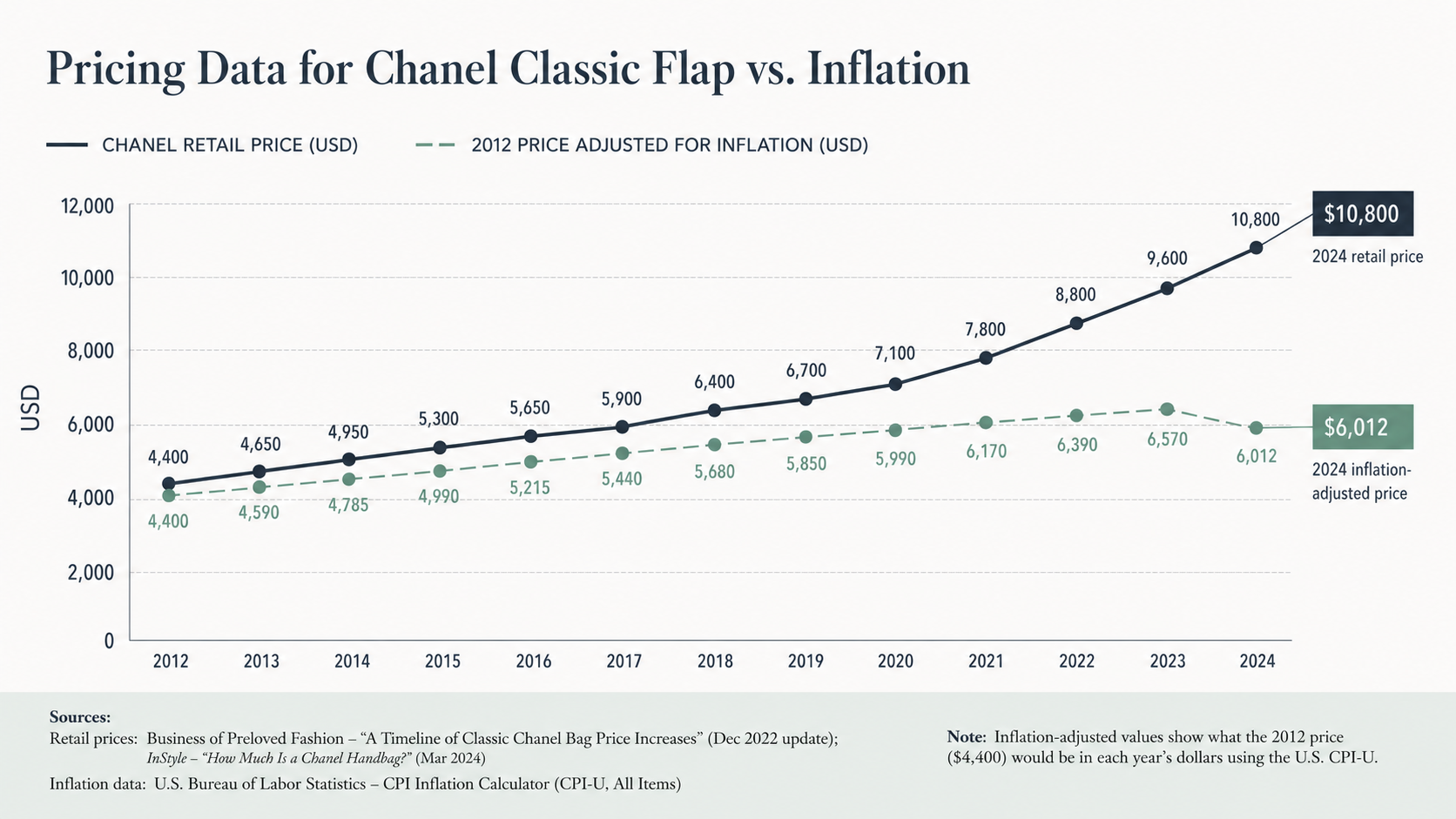
The shift is visible not only culturally, but economically. Recent reporting from McKinsey and The Business of Fashion identified growing consumer scrutiny surrounding escalating prices, perceived quality inconsistencies and diminishing innovation across major luxury houses.1 At the same time, luxury pricing has significantly outpaced inflation across core categories such as leather goods and accessories.
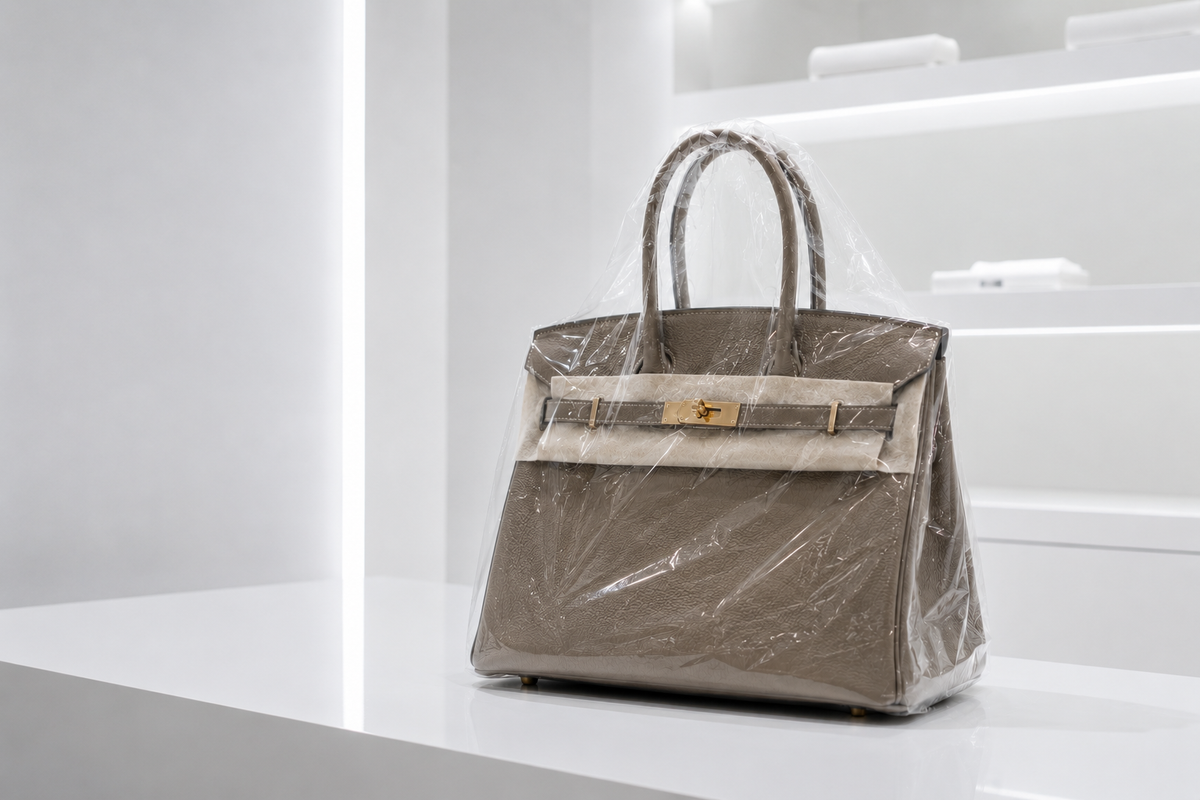
Across social media platforms, pristine handbags wrapped in protective plastic are celebrated for maintaining immaculate condition. Online discussions revolve around resale forecasts, waitlists and market trajectories. Purchasing decisions are shaped not simply by attachment or utility, but by projected value retention. In many cases, luxury goods are no longer expected to accompany life — they are expected to resist it.
Luxury once positioned itself as the realm of sensuality, craftsmanship and pleasure — a world centred around texture, indulgence and emotional experience. Now, ownership often feels strategic. Consumers are encouraged to preserve products carefully, protect hardware from scratching and maintain resale condition with near-archival precision. The object begins to resemble a financial instrument disguised as lifestyle consumption.
In the pursuit of maintaining value, luxury risks becoming emotionally sterile.
This tension becomes particularly visible through the erosion of symbolic distance. Historically, luxury derived much of its power from restricted visibility and controlled access. Certain products communicated exclusivity precisely because they remained socially distant and relatively inaccessible. Digital culture has fundamentally altered these conditions.
Through influencer culture, algorithmic repetition and counterfeit proliferation, many once-exclusive products have become endlessly circulated cultural symbols. The consequence is not merely overexposure, but symbolic dilution. Products such as the Louis Vuitton Neverfull, Gucci Marmont and Rolex Submariner have become so visually familiar that their ability to communicate individuality has weakened significantly.
Luxury, once associated with distinction, increasingly risks aesthetic predictability. This may help explain the growing appeal of premium brands. Not because they necessarily imitate luxury particularly well, but because they often feel liberated from many of luxury’s contemporary contradictions.
Their products are expensive enough to feel intentional, yet not so financially mythologised that ownership becomes psychologically burdensome. They invite use rather than preservation. More importantly, many premium brands benefit precisely from relative obscurity. Their appeal lies less in immediate recognition and more in the quieter satisfaction of discovery, curation and personal taste.
In this sense, premium brands offer something many luxury products struggle to maintain: individuality.
This shift also reflects a broader cultural fatigue surrounding hyper-visibility and performative consumption. The dominance of logomania throughout the 2010s transformed luxury into a recognisable and algorithmically amplified visual language. Products were designed not simply to be owned, but to be recognised instantly within digital culture. However recognition alone is no longer sufficient to sustain desirability.
Industry reporting from The Business of Fashion has identified growing consumer preference for understated, logo-minimal products, particularly among younger affluent buyers prioritising subtlety, longevity and material quality over overt branding and trend visibility.2 What appears to resonate now is not spectacle, but discernment. This creates a difficult tension for traditional luxury houses.
Veblen theory assumes that higher prices reinforce desirability because expense itself signals prestige. Yet contemporary consumers are more informed, more digitally literate and more psychologically aware of branding mechanisms than ever before. Scarcity narratives, heritage storytelling, influencer placement and artificial exclusivity are no longer invisible systems operating quietly in the background. Consumers are cognisant of the machinery behind luxury signalling itself. Once that machinery becomes too visible, the emotional spell weakens.
This does not mean luxury is collapsing. Luxury continues to possess enormous cultural power because humans remain deeply responsive to symbolism, aspiration and social distinction. What appears to be changing, however, is the framework through which value is interpreted.
Consumers are becoming more willing to evaluate luxury privately rather than socially — through emotional durability, material satisfaction and the lived experience of ownership itself.
Perhaps this is why products that feel personal, worn-in and emotionally integrated are becoming more compelling than perfectly preserved status objects. A beautifully softened leather bag can communicate confidence in a way immaculate preservation often cannot. Wear suggests participation rather than curation. It implies that the object fulfilled its purpose rather than existing solely to maintain exchange value.
Contemporary luxury now appears caught between two competing identities. One moves toward financialisation, scarcity engineering and optimisation culture. The other moves toward intimacy, tactility and emotional durability.
The most powerful luxury object may no longer be the one that signals wealth most aggressively, but the one capable of surviving after status, performance and spectacle lose their emotional hold.
Sources
¹ The State of Luxury
McKinsey & Company & The Business of Fashion, 2025
² How Logo-Free Luxury Is Reshaping the Fashion Market
The Business of Fashion