At the High Altar of Luxury: The Deification of the Designer and the Making of Modern Legends

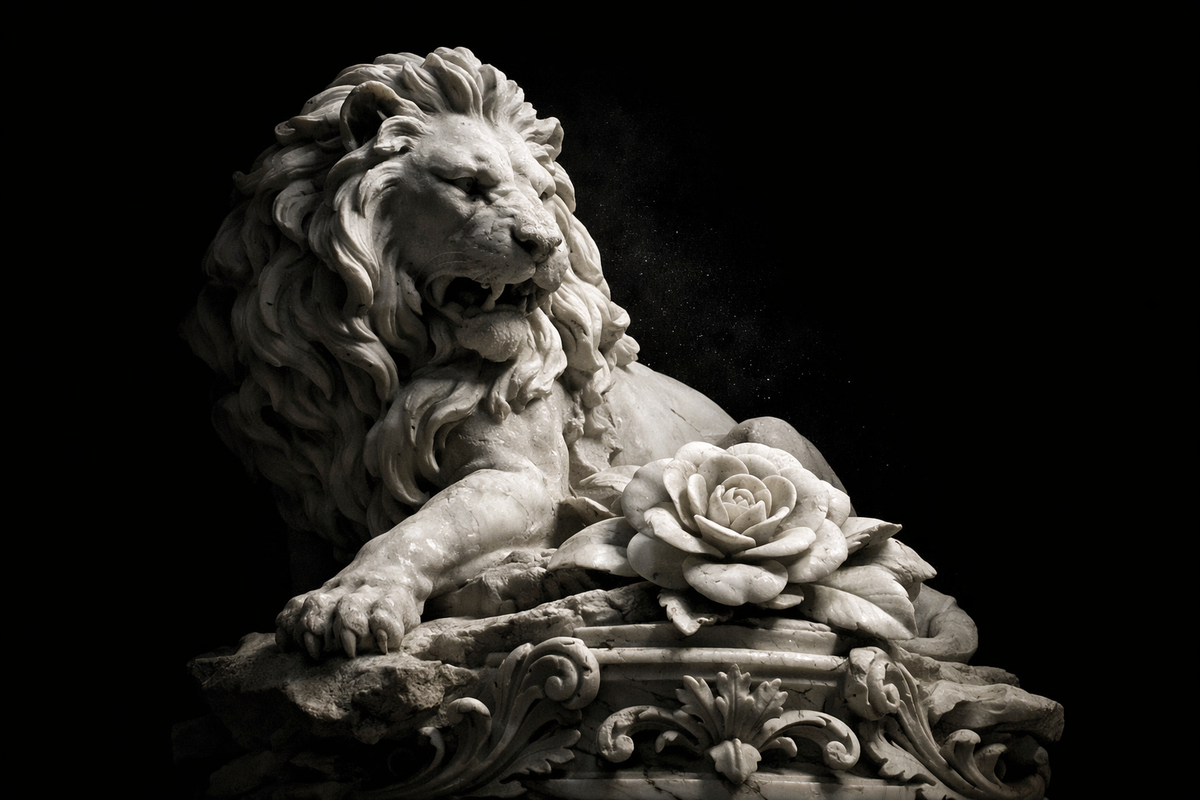
Behind the language of heritage and craftsmanship lies a quieter phenomenon: myth-making. Over time, the founders of luxury houses are elevated from designers and entrepreneurs into enduring legends of the brand.
The luxury industry likes to speak about craft. The vocabulary is familiar: ateliers, heritage, savoir-faire, tradition. These words create the reassuring impression that luxury houses are guardians of technical excellence, institutions dedicated to preserving beauty through skill and discipline.
Yet anyone who spends time studying the industry eventually notices something else operating beneath this language. Luxury does not run on craftsmanship alone. It also runs on myth.
The founders of luxury houses rarely remain ordinary historical figures. Over time their biographies acquire a certain polish. Stories are repeated, refined and circulated through exhibitions, campaigns and brand archives until the founder begins to occupy a curious position somewhere between entrepreneur and cultural icon.
Gabrielle Chanel is remembered less as a businesswoman than as the architect of modern femininity. Christian Dior’s name evokes not merely a successful couture house but a moment of aesthetic restoration after the austerity of war. Gianni Versace appears in the collective imagination as the designer who fused fashion, spectacle and sensuality into a new cultural language.
With enough repetition, biography begins to take on the texture of legend.
The Migration of Myth
Human societies have always organised meaning around symbolic figures. In ancient civilisations these figures took the form of gods and heroes whose stories explained power, beauty and creation. Religious traditions later refined this impulse through saints and sacred iconography, allowing complex narratives to be condensed into recognisable symbols and rituals (Campbell, 1949; Belting, 1994).
Modernity did not eliminate this impulse so much as redistribute it.
As traditional religious authority receded in many societies, new kinds of cultural figures emerged to occupy the imaginative space once held by saints and heroes. Artists, innovators and entrepreneurs increasingly became the protagonists of modern mythology. Their biographies were repeated and stylised until they came to embody particular ideals: genius, rebellion, creative vision.
Luxury houses have proven remarkably adept at cultivating this form of secular myth.
Within the narrative architecture of many brands, the founder gradually becomes something more than a historical individual. Their life begins to function as the symbolic origin of the house itself.
The Founder as Origin Story
Every mythology requires a beginning, and luxury houses tend to locate that beginning in the life of the founder.
The details of these biographies often follow familiar narrative patterns. The founder appears as the outsider who challenged convention, the visionary who redefined taste, or the obsessive craftsman who transformed a personal philosophy into an aesthetic universe (Kapferer & Bastien, 2012).
Reality is rarely so tidy. Founders, like most people, tend to lead complicated lives full of contradictions, compromises and occasionally scandal. But mythology has never been particularly interested in the untidy edges of biography.
Over time the complexities of a life are gradually distilled into something clearer and more repeatable: the woman who liberated fashion from corsetry, the couturier who reinvented elegance, the engineer who transformed speed into beauty.
The resulting story does not simply explain how the brand began. It becomes part of how the brand understands itself.
Authority Without Presence
Once established, the founder’s narrative tends to acquire an unusual kind of authority.
Luxury houses frequently refer to the “codes” or “spirit” of the founder, terms that suggest a philosophy whose relevance extends far beyond the founder’s lifetime. When new creative directors take the helm, their work is often framed as a process of interpretation rather than replacement.
Fashion journalism has developed its own language for describing this continuity. Designers are said to revisit, reinterpret or honour the house’s founding codes. The implication is that the founder’s aesthetic principles continue to provide the conceptual framework within which the brand operates.
The founder’s physical presence may belong to the past. The authority attached to their vision rarely does.
The Semiotics of Legends
Narratives alone are rarely sufficient to sustain cultural memory. For a legend to endure, it usually requires symbols.
Religious traditions understood this well. Saints were associated with specific objects or visual attributes—keys, lilies, crowns—that allowed their stories to be recognised instantly. Iconography transformed biography into something immediately legible (Belting, 1994).
Luxury houses employ remarkably similar mechanisms.
Certain motifs become so closely tied to the founder’s story that they function as semiotic anchors for the brand’s identity. Chanel’s camellia, Versace’s Medusa and Lacoste’s crocodile each began as details connected to the founder’s life or imagination before evolving into enduring visual signatures.
The camellia reflected Gabrielle Chanel’s personal aesthetic preferences and gradually became embedded across jewellery, couture and accessories (Picardie, 2010). Gianni Versace’s Medusa drew on classical mythology to capture the hypnotic power he associated with fashion. René Lacoste’s crocodile originated as a sporting nickname before transforming into one of the most recognisable logos in modern apparel.
Through repetition these symbols acquire a life of their own.
Even as collections change and creative directors come and go, the symbols continue quietly reinforcing the founder’s narrative.
The Machinery of Memory
Luxury houses devote considerable energy to maintaining this continuity.
Archives preserve garments, sketches and personal artefacts associated with the founder. Exhibitions transform brand history into cultural spectacle. Anniversary collections revisit iconic designs, allowing the past to circulate once again in contemporary form.
These practices ensure that the founder remains present within the brand’s imagination long after the historical individual has disappeared.
The founder gradually shifts from being a person who once existed to a figure who continues to shape how the brand understands itself.
Luxury and the Persistence of Myth
Seen from this perspective, luxury houses begin to resemble something more than fashion businesses. They operate as institutions that cultivate and transmit mythology.
In earlier centuries mythic authority was attached to gods, saints and sacred figures. In contemporary culture the arena has changed, but the mechanism remains recognisable. Cultural influence increasingly gathers around individuals whose biographies can be transformed into symbolic narratives.
Within luxury, the founder occupies a particularly durable version of this role.
Their story becomes the point from which the brand’s identity radiates. Their symbols circulate through objects, campaigns and retail environments. Their aesthetic philosophy continues to frame the work of designers who follow.
The individual belongs to history.
The legend remains active.