
When Luxury Meets Leverage

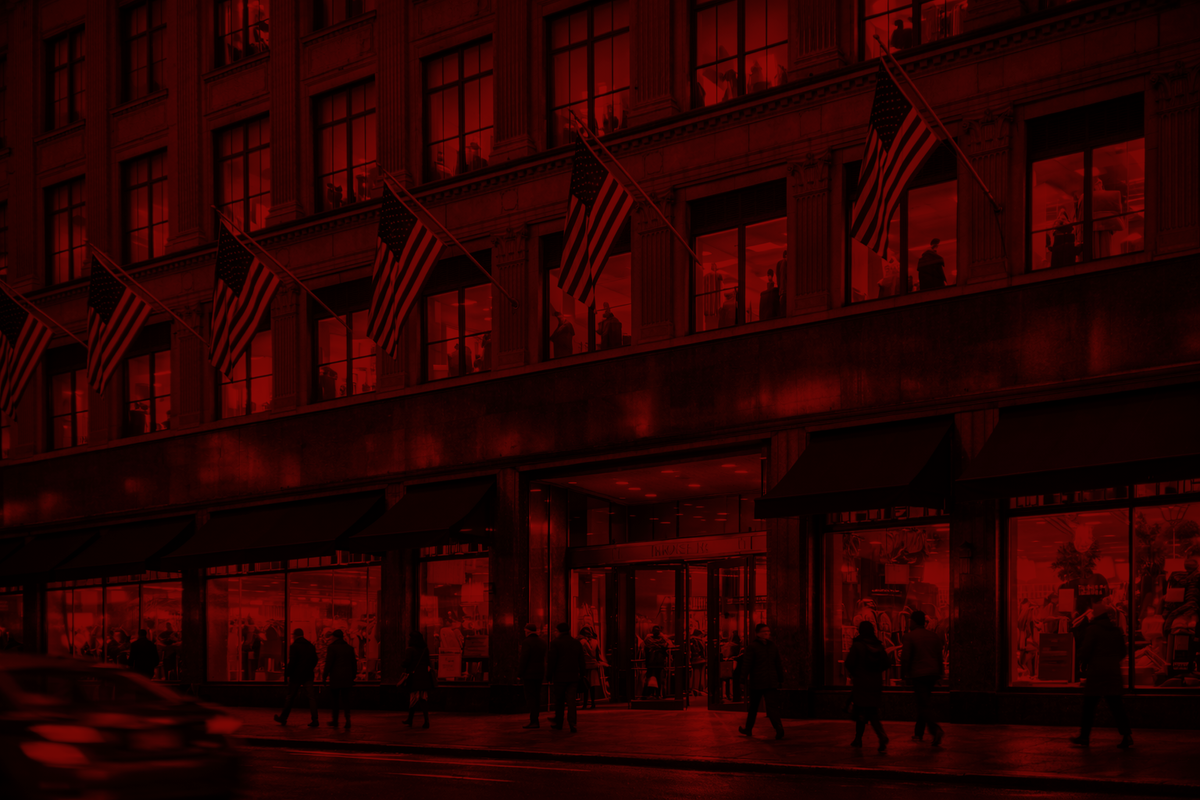
Saks Fifth Avenue’s bankruptcy exposes the financial fault lines beneath prestige retail — and why demand was never the problem.
Not a loss of desire, but a liquidity crisis
In January 2026, Saks Global filed for Chapter 11 bankruptcy protection in the United States. The filing followed months of mounting financial pressure after the group failed to make an interest payment of approximately $100 million late in the previous year. This was not a sudden collapse triggered by consumer rejection. It was the mechanical failure of a capital structure that had lost its margin for error.
Saks Global had been assembled through a series of leveraged transactions, most notably the $2.7 billion acquisition of Neiman Marcus in 2024. By the time of the bankruptcy filing, court disclosures and contemporaneous reporting indicated that the group was carrying roughly $3.4 billion in funded debt. Assets and liabilities were each estimated in the broad range of $1 billion to $10 billion, reflecting both the scale of the business and the complexity of its balance sheet. To maintain operations during restructuring, the company secured approximately $1.75 billion in new financing, including a $1 billion debtor-in-possession facility.
These figures matter because they establish what this event actually was: a liquidity crisis driven by leverage, not a collapse in luxury demand.
The balance sheet beneath the brand
Luxury is often described as recession-proof, a shorthand for its historical resilience among high-income consumers. That resilience remains largely intact at the brand level. What does not follow is the assumption that all businesses operating within the luxury ecosystem share the same financial immunity.
Leverage changes the rules. In highly indebted retail structures, debt servicing competes directly with inventory investment, payroll, rent, and experiential reinvestment. A business does not need collapsing revenue to fail; it only needs insufficient free cash flow after fixed obligations are met. In Saks’ case, the missed $100 million interest payment was not symbolic. It was evidence that interest expense had overtaken operating flexibility.
Once that threshold is crossed, management options narrow rapidly. Cost-cutting becomes compulsory, reinvestment is deferred, and liquidity replaces desirability as the central constraint. Brand strength cannot compensate for capital structures that cannot bend.
Department stores as financial shock absorbers
Department stores occupy a uniquely exposed position within the luxury value chain. They carry inventory risk without full pricing authority, operate expansive physical footprints with long-dated lease obligations, and function on operating margins that are thin even in stable conditions.
For years, these platforms acted as shock absorbers for luxury brands. As brands shifted toward direct-to-consumer models, wholesale partners increasingly absorbed volatility related to inventory, markdowns, staffing, and real estate. The resilience of many luxury houses over the past decade has been achieved, in part, by transferring risk outward to intermediaries like Saks.
This arrangement remained viable while capital was cheap. Once financing costs rose and growth normalised, the imbalance became visible. Department stores were no longer buffering the system; they were bearing it.
The economics of intermediation
The structural weakness of department stores becomes clearest when examined quantitatively. While gross margins may appear reasonable, the gap between gross margin and operating margin is where fragility resides. Inventory carrying costs, occupancy expenses, staffing, logistics, and promotional intensity erode profitability long before debt servicing is considered.
A comparison between traditional U.S. department stores and vertically integrated luxury brands illustrates this asymmetry.
| Financial Metric | Department Stores (Typical) | Vertically Integrated Luxury Brands |
|---|---|---|
| Net profit margin | ~2.0–2.2% (Macy’s, Nordstrom) | ~20–40%+ (LVMH, Hermès) |
| Operating / EBITDA margin | ~6–8% | ~21–40%+ |
| Inventory as % of revenue | ~25–30% | ~15–20% |
| Lease and occupancy costs | ~10–15% of revenue | ~5–8% of revenue |
| Pricing control | Limited | Full |
| Balance-sheet flexibility | Constrained | Relatively resilient |
Source: Reuters analysis; Morningstar retail sector data; LVMH and Hermès annual reports; U.S. department store financial disclosures (Macy’s, Nordstrom), 2023–2026.
These figures, drawn from recent SEC filings, annual reports, and financial summaries, explain why leverage behaves so differently across the two models. A business operating on a two-percent net margin cannot absorb the same shocks as one operating at twenty or thirty percent, regardless of brand desirability.
This is why luxury brands have systematically reduced reliance on wholesale platforms. Control over pricing, inventory, and distribution is not merely a branding preference; it is a financial survival strategy.
When private equity meets prestige
Ownership structure intensified these vulnerabilities. The consolidation of Saks, Neiman Marcus, and Bergdorf Goodman under Saks Global reflected a broader trend toward the financialisation of prestige retail. Leveraged ownership models prioritise capital efficiency, defined return horizons, and debt optimisation. Luxury retail demands patience, reinvestment, and tolerance for cyclical softness.
These logics sit uneasily together. The Neiman Marcus acquisition added scale, but it also layered leverage onto a business already operating with thin margins and heavy fixed costs. What appeared manageable under optimistic assumptions became restrictive once operating cash flow tightened and interest obligations rose.
Luxury assets do not behave like conventional retail plays. Their value compounds slowly, their reputational capital is fragile, and their economic payoff unfolds over decades rather than quarters. Financial engineering can extract value from them, but it can also erode the resilience required to sustain them.
Saks’ trajectory is not anomalous. It is illustrative.
What the bankruptcy signals — and what it doesn’t
It is tempting to read Saks’ bankruptcy as a warning about luxury’s future. That interpretation would be misplaced. This event does not signal collapsing demand, cultural fatigue, or the end of aspiration. It signals a narrowing tolerance for fragile intermediaries.
Luxury demand remains intact where brands retain pricing power, control distribution, and manage leverage conservatively. What is being culled is not desire, but financial overextension.
Confusing platform failure with brand weakness leads to the wrong conclusions — and the wrong strategies.
The structural divide ahead
The future of luxury will be defined less by aesthetics or aspiration than by balance-sheet discipline. Vertically integrated brands with asset-light models and conservative leverage will consolidate strength. Capital-intensive platforms that depend on scale without flexibility will continue to retrench or disappear.
Prestige is not disappearing. It is migrating toward structures capable of withstanding financial stress.
Luxury did not fail at Saks. The financial architecture surrounding it did. And as capital becomes more expensive and balance sheets more exposed, that distinction will only become harder to ignore.